The Silence of the Pines:
The Ina Langstaff Case
November 6, 1987 — March 23, 2026 · Flagstaff, Arizona
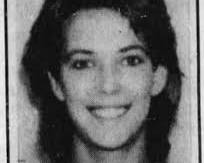
Ina Claire Langstaff · 1963–1987

James Arthur Runnels Jr · Arrested 2026
The air in Flagstaff in November is sharp—the kind of cold that feels like it's waiting for something. On the night of November 6, 1987, that cold was a quiet witness to a tragedy that would haunt the city for the next thirty-nine years.
Ina Claire Langstaff was only twenty-four. A student at Northern Arizona University, she was building a life defined by curiosity: a political science major with a passion for French, a young woman navigating the threshold of adulthood in a mountain town that, at the time, still felt like a well-kept secret.
She lived in the 500 block of Tucson Avenue, a slice of Old Town that was then far removed from the polished, Airbnb-dominated streets of the modern era. That night, she told her roommate she was going to step out to walk her cat. It was a mundane, peaceful act—the kind of domestic ritual that makes a place feel like home.
She never made it back.
The Discovery
The next morning, the silence was shattered. Ina's body was found in the parking lot of her apartment complex. The brutality of the act—twenty stab wounds to her upper torso—was a violent rupture in the fabric of the community. In 1987, Flagstaff was a place where doors were often left unlocked and neighbors knew each other by name. The murder of Ina Langstaff didn't just take a life; it stole the city's sense of safety.
For weeks, the investigation was a frantic scramble. Police interviewed acquaintances and tracked leads, but the mountain air seemed to swallow the truth. As the years turned into decades, the case file grew heavy with dust. Names of suspects were cycled through, investigated, and discarded. For a time, investigators looked into Richard Ortega, a man later linked to other violent crimes, but the physical evidence simply wasn't there.
Eventually, the case went cold. Ina became a ghost in the city's records—a name brought up only in hushed tones during "true crime" conversations at local bars or mentioned as a cautionary tale of a city that was changing.
The Long Shadow of Time
While the world moved on—while Flagstaff transformed into a destination for the wealthy and a hub for the tourism industry—the mystery of Ina's death remained frozen in 1987.
But justice in the modern age works differently. It works in the silence of laboratories and the persistence of people who refuse to let a file be closed. In 2025, the Coconino County Attorney's Cold Case Unit, equipped with forensic technology that would have been science fiction when Ina was alive, returned to the original crime scene evidence.
They weren't looking for memories; they were looking for the microscopic truth left behind by the perpetrator.
The Unmasking
On March 19, 2026, the silence finally broke. A Coconino County grand jury indicted James Arthur Runnels Jr., a 62-year-old man who had been living in Flagstaff at the time of the murder, but had moved to Glendale in the years since.
When the news broke, it didn't just mark an arrest; it marked the end of an era of uncertainty. For Ina's family, it was a profound, aching relief after nearly four decades of unanswered questions. For the city of Flagstaff, it was a reminder that even the deepest, coldest shadows cannot withstand the slow, steady light of persistent investigation.
The Legacy of the Lantern
We write about Ina Langstaff on Lanterns in the Dark not to sensationalize her death, but to honor the truth of it. Her life was more than the manner of her passing. She was a scholar, a cat owner, a young woman with a future that was cut short by someone who thought they could get away with it.
Today, if you walk down Tucson Avenue, the neighborhood looks different. The town is louder, busier, and more expensive. But the history of a place isn't just in the buildings—it's in the people who came before us.
Ina Langstaff is finally resting in the light. But the case serves as a permanent sentinel in our archive, reminding us that in this mountain town, the past is never really gone. It is simply waiting, in the dark, for the right moment to be brought home.
How It Was Solved
1. The Power of "Cold" Persistence
Following the original 1987 investigation—which involved numerous witness interviews but failed to produce a conviction—the case file remained active, albeit dormant. The Coconino County Attorney's Cold Case Unit and the Flagstaff Police Department made it a priority to periodically re-examine the original evidence collected from the crime scene in the 500 block of Tucson Avenue.
2. The 2025 Forensic Breakthrough
The definitive turning point occurred in 2025. Investigators submitted preserved evidence to the Department of Public Safety's Northern Regional Crime Laboratory.
While authorities have remained tight-lipped about the specific type of DNA analysis used—citing the ongoing nature of the criminal proceedings—they confirmed that new forensic technology allowed them to extract and analyze data from the original evidence that was previously undetectable or insufficient, and that this testing generated "new information" that directly linked James Arthur Runnels Jr. to the crime scene.
3. The Arrest
Once the DNA evidence provided the connection, the legal process moved quickly. On March 19, 2026, a Coconino County grand jury officially returned an indictment charging Runnels with one count of first-degree murder. On March 23, 2026, Flagstaff police, in coordination with the Coconino County Attorney's Office, arrested Runnels in Glendale, Arizona.
A Note on the "How"
It is important to note that law enforcement has not publicly detailed the exact mechanism of the DNA identification—such as whether it was through a specific database, genealogy mapping, or traditional CODIS matching. Because the case is currently pending in Coconino County Superior Court, prosecutors are limited in what they can disclose to ensure a fair trial.
However, the case stands as a powerful example of how "cold" cases are increasingly being solved by taking decades-old physical evidence and subjecting it to the vastly more sensitive and precise tools of modern molecular biology.
Lanterns in the Dark · Dark Chronicles Archive

